


Last updated:February 19, 2026, 14:21 IST
According to his companions, Imran Khan turned to Shahi Imam and said that his visit to Delhi’s Jama Masjid had deepened his understanding of India.




More than 20 years later, as Ramadan begins again, memories of that night at Jama Masjid come flooding back.
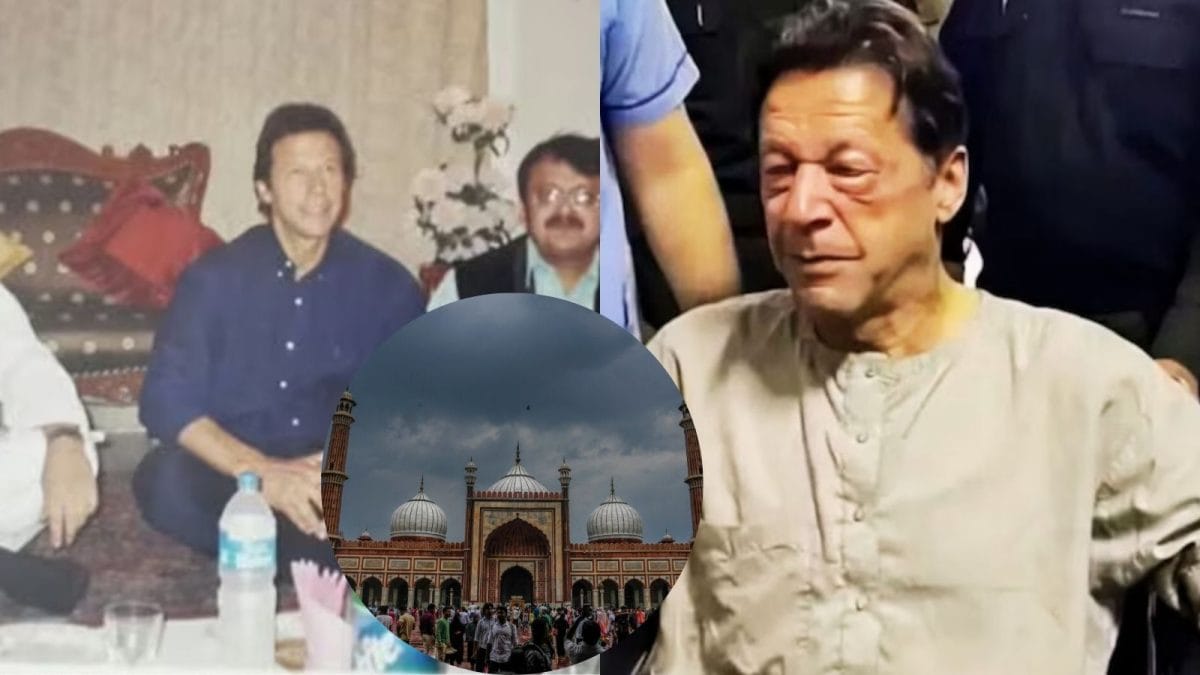
On November 4, 2004, with just two days left until Eid and the end of Ramadan, an unusual visitor joined hundreds of worshipers at Delhi’s historic Jama Masjid to offer Maghrib prayers. As dusk subsided and rows of fasting believers broke their fast with dates and fruits, the presence of Imran Khan, Pakistan’s most famous cricketer at the time, caused a wave of excitement in the courtyard.
When the prayers were over and word spread that the Khan was among them, the worshipers gathered and offered dates and fruits to him. He spent time interacting with the crowd and spoke briefly to those in attendance. For a moment, he stood quietly observing fasting believers sitting together, an iconic image of a Ramadan night in a 17th-century mosque.
Khan then consulted Shahi Imam Ahmed Bukhari and said that visiting the Great Mosque had deepened his understanding of India, according to his companions. Interested in the upkeep of the monument, he asked who was responsible for its upkeep. Informed that it was under the supervision of the Archaeological Survey of India (ASI), he is said to have expressed his gratitude for its good state of preservation.
Mr. Khan was in the capital to participate in the Hindustan Times Leadership Summit, one of the most prominent political and intellectual exchange forums in South Asia at the time. At the time, he was widely regarded as one of the region’s biggest personalities, long before his political rise and subsequent imprisonment in Pakistan.
His visit to the mosque was made pursuant to a personal request. He expressed his desire to offer prayers at Jama Masjid and arrangements were made in coordination with Imam Bukhari. Maulana Azad’s grandson and writer Firoz Bakht Ahmed was among those in attendance. Mr Khan was driven from the Maurya Sheraton Hotel to the mosque in a Contessa car, passing through central Delhi and taking in the cityscape.
Along the way, he noticed the number of mosques dotting the skyline. “Delhi has so many mosques,” he said, comparing it to Islamabad. Regarding Punjabi, he was surprised by the number of Punjabi speakers he met and said he saw little difference between Lahore and Delhi. The conversation turned to Partition and the migration of Hindu and Sikh families from Lahore to Delhi in 1947. This interaction seemed to intrigue him.
During the three- to four-day stay, the conversation went beyond cricket and politics. During a private discussion at a hotel on November 2, 2004, Khan spoke at length about his maternal roots in Jalandhar. His mother, Shaukat Khanum, was born there and lived in Basti Now until Partition. Khan said his grandfather Ahmed Hasan Khan had founded an Islamic university in Jalandhar and that his family had deep roots in the area going back centuries.
He described visiting his ancestral home during a trip to India in 1983, and reflected on Jalandhar’s layered history, which he believed dated back thousands of years. Khan, who studies history at Oxford, appeared animated as he discussed the city’s medieval and colonial past, settlements such as Basti Now and Basti Danishmandan, and the strategic importance of the Sutlej and Beas rivers during the Mughal era.
His statements sometimes became political. The summit was also attended by Altaf Hussain, founder of Muttahida Qaumi Movement. Although they both shared Pakistani nationality, they distanced themselves. Mr Khan criticized Mr Hussain and the MQM’s role in Karachi’s tumultuous politics, but Mr Hussain’s speech questioned the interests of Pakistan’s creation and referred to the plight of Urdu-speaking migrants, comments that reportedly made some attendees uncomfortable.
More than 20 years later, as Ramadan begins again, memories of that night at Jama Masjid come flooding back. Mr. Khan, once cheered by packed stadiums and courted on the international stage, is now imprisoned in Pakistan. Reports of severe deterioration in his right eye, including significant loss of vision, have caused concern among supporters and critics alike.
For those who witnessed his visit in 2004, the contrast is clear. Mohammad Taqi, a social worker from Old Delhi who was at the mosque that night, said he was saddened to hear about Khan’s health. “I will pray for him,” he said quietly, describing the former cricketer-turned-politician as a “very dear enemy.”
February 19, 2026, 14:18 IST
read more
