

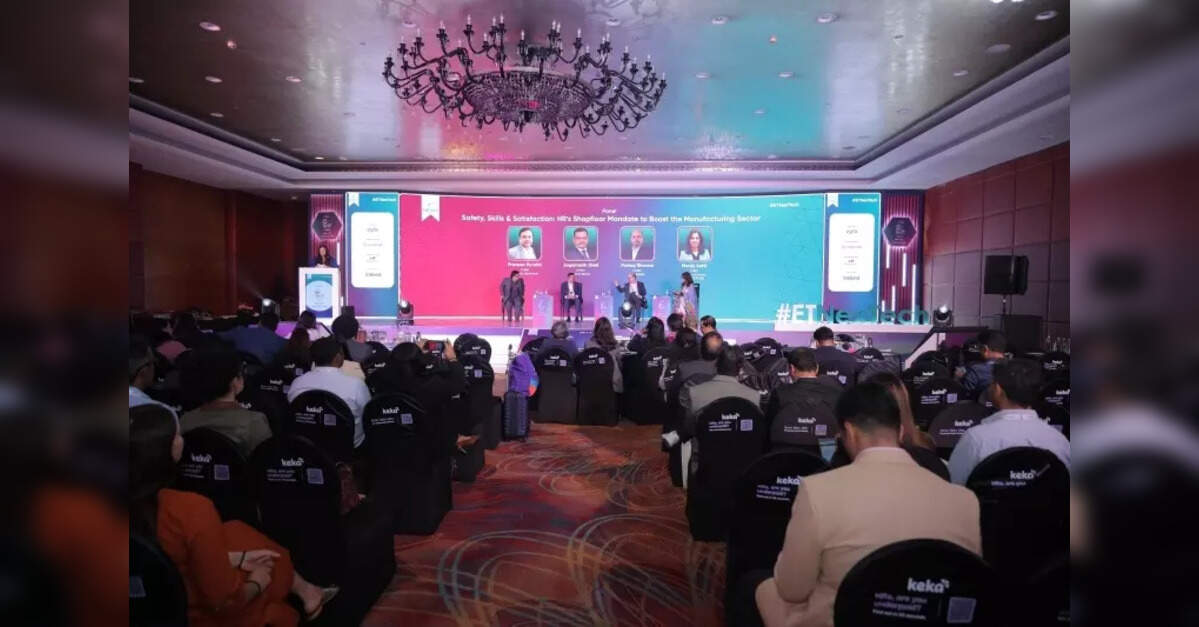
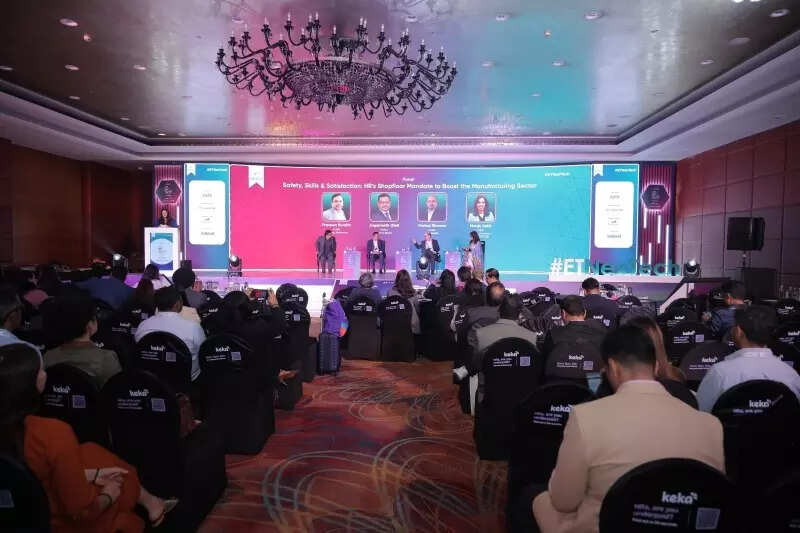
At ET Nextech Human Capital India Summit 2026, a panel titled ‘Safety, Skills, Satisfaction: HR’s field mission to strengthen the manufacturing sector’ shifted the spotlight from the AI hype to the fundamentals of manufacturing where humans remain at the core of productivity. Moderated by Manju Kohli from Relaxo Footwear, the session featured Praveen Purohit, CHRO and Vedanta Aluminum. Jagannath Oleti, CHRO, Lumax World, and Pankaj Sharma from APL Apollo discuss what’s at the heart of today’s frontline talent strategy.
For Pankaj Sharma of APL Apollo, priorities are non-negotiable and human-centric. “I always refer to this as the 3Ss: Safety, Skills and Site Involvement,” he said, emphasizing that safety goes beyond machines and processes and covers the entire ecosystem, including off-site risks. As steel manufacturing operates in a high-risk and competitive environment, Sharma positions continuous skill acquisition as both a means of retention and a path to growth, with participation through engagement and ownership locking in productivity and belonging.
Lumax World’s Jagannath Oleti expanded the lens with four interventions designed to achieve high-performance operations without alienating frontline talent. “Catch them young” is the starting point, he said, explaining how degree-earning engineers can join the company early and be given a visible career path from the field to supervisory and engineering roles. The second lever is structured engagement through kaizen-driven improvement programs, backed by recognition and rewards. The third is a factory-level learning infrastructure to train new entrants and strengthen their technical capabilities. A “gurukul” is installed in every unit. Fourth, and increasingly strategic, is inclusion. Mr. Oreti emphasized that the company is intentionally promoting diversity and inclusion on the shop floor, including opportunities for workers with disabilities, noting that inclusive production lines can also improve stability and productivity. Vedanta Aluminum’s Praveen Purohit argued that the next wave of manufacturing is inseparable from the adoption of modern technology, but said HR’s role is to ensure frontline workers see automation as an opportunity rather than a threat. He said Vedanta’s metals and mining business is technology-driven and emphasized that scaling up requires preparation at the front. “When you have to have something like a $20 billion growth plan, you’re not going to achieve your purpose until your employees all the way down the pyramid understand and appreciate it,” he said, pointing to digital infrastructure and workplace improvements that are changing the real experience for field teams. The conversation also addressed key concerns for manufacturing leaders: going beyond SOP training to build competency and perform without burnout. Sharma said capacity building must be coupled with continuous learning, multiskilling, and true problem-solving ownership supported by recognition systems that reward correct behavior. In the context of auto parts, where margins and schedules are tight, Oleti highlighted data-driven workforce planning for cyclical demands, cross-skilling to enable rapid redeployment between lines, and Kaizen as a cultural engine of engagement. He linked sustained performance to predictable staffing, modern training techniques, and on-the-job involvement, rather than over-reliance on overtime results.
Purohit added that satisfaction in the field needs to be designed through mobility and exposure, not just policies. He talked about job rotation between locations, global opportunities for field employees, benchmark visits and a broader ownership model. “They are given inventory…they own the company,” he said, arguing that when front-line talent can see clear learning, rewards and career progression, technology adoption becomes easier and engagement is strengthened.
Across a variety of sectors, from steel and auto parts to metals, panels rallied around the common theme that manufacturing competitiveness is ultimately a matter of on-site HR architecture. Efforts focused on safety discipline, skill mobility, and satisfaction are no longer “talent programs.” These are the operational imperatives that will determine throughput, quality and resilience as India expands its manufacturing ambitions.