


Almost eight years after initiating procurement under the Multi-Role Fighter Aircraft (MRFA) programme, the Ministry of Defense (MoD) is finally set to sign a Rs 3.25 billion ($36 billion) contract to procure 114 Rafale fighter jets for the Indian Air Force (IAF).
Roughly speaking, India currently operates around 600 fighter jets and is poised to acquire 114 more.
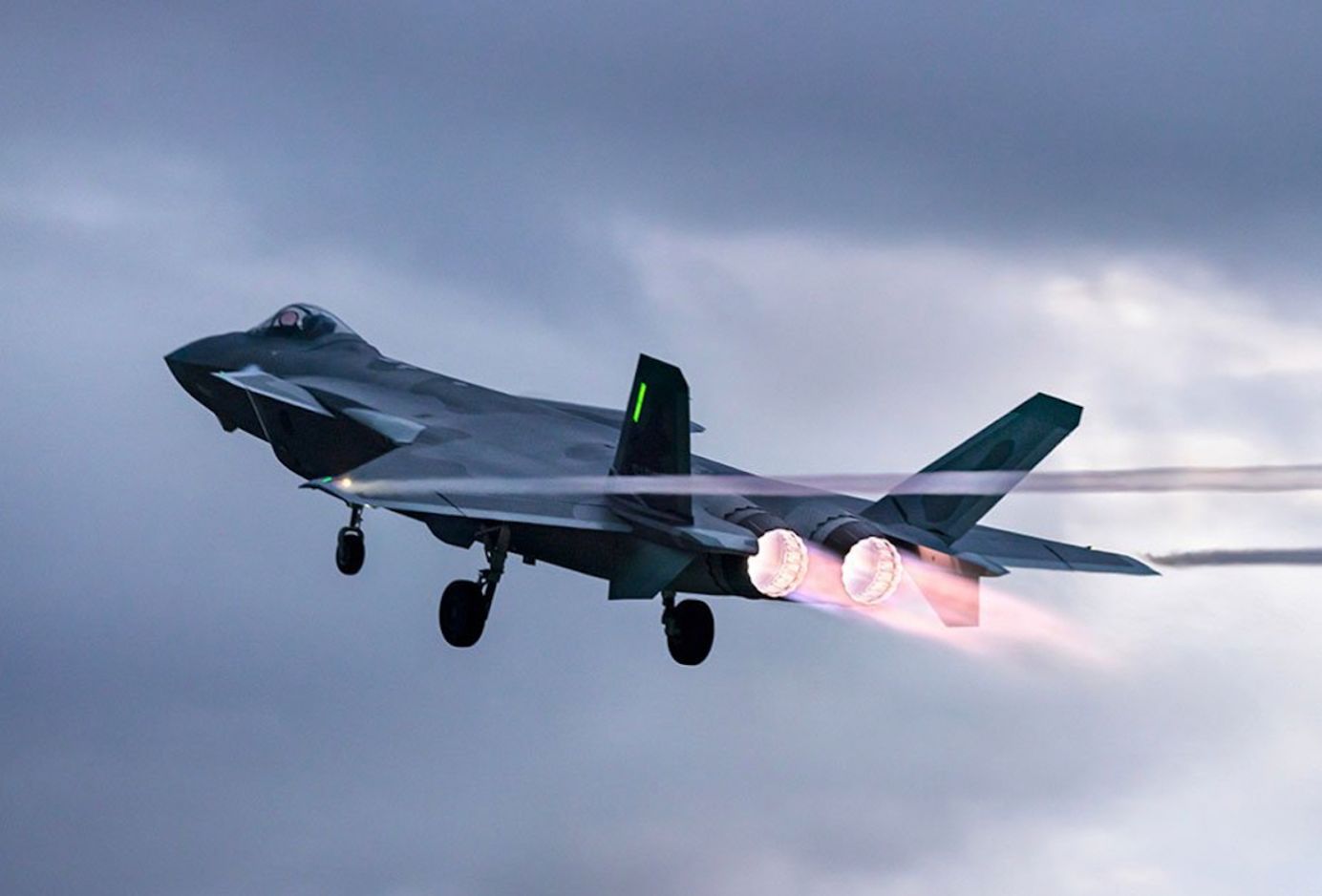
In contrast, in 2025 alone, the People’s Liberation Army Air Force (PLAAF) is estimated to have inducted an additional 120 J-20A and J-20S heavy stealth fighters. (J-20A is a dual-seat version of J-20.)
Also in 2025, the PLA Air Force will induct between 100 and 170 additional fighter jets, including the J-16/D, J-15/T/DH/DT, and J-10A/B/C.
In other words, the PLA Air Force could have added up to 300 heavy stealth and non-stealth fighters to its inventory in a single year.
Venezuela’s F-16 and Su-30 fighters were “saved”! Inside the US contingency plan to cripple Maduro’s airfield
Projections from the Royal United Services Institute (RUSI) suggest that approximately 1,000 J-20A/S fighters and 900 J-16s will be in service with the People’s Liberation Army Air Force by 2030.
The number of J-20s manufactured increased from approximately 150 in August 2022 to 208 in November 2023. The production rate is likely to reach 100 aircraft per year in 2023, after which it will stabilize at around 120 aircraft per year.
In addition to the planned 1,000 J-20A/S stealth fighters, the PLAAF could also field hundreds of ground-based J-35 variants.
The J-35 is believed to have a low initial production rate, but production is expected to increase in the coming years. With J-20 production increasing rapidly, 200 to 300 J-35s could be operational by 2030.
“Port War”: Inside the U.S.-China conflict in Latin America as President Trump aims to capture Beijing’s biggest trading partner
Notably, the J-35 will field sophisticated sensors and weapons derived from systems painstakingly perfected for the J-20.
India’s reckless indifference
Indians, unaware of this growing threat, are passionately discussing the need for additional Rafale jets. To make matters worse, the Indian government appears to be ignoring the Russian proposal, despite the IAF predicting that two to three squadrons of interim stealth fighters are needed to fill the growing operational gap.
Frankly, the only plausible explanation for India responding to Russia’s overtures appears to be the deep penetration of the Central Intelligence Agency (CIA) and the US military-industrial complex (MIC) into Indian business, bureaucracy, and political leadership. If so, India’s sovereignty is largely illusory. I hope this assessment is wrong, but this issue needs serious reflection.
There is an urgent need to separate ToT from weapons acquisition.
The main reason for the nearly 30 per cent decline in IAF squadron strength from 42 squadrons to 29 squadrons is continued delays in deliveries of Tejas and its successors, including the Tejas Mk-1A and Tejas Mk-2.
Remarkably, the Ministry of Defense and political leadership did more than superficial tinkering with procurement procedures to address these catastrophic delays. The results were predictable. The process stalled and eventually ran aground. Was this paralysis by analysis? probably. Perhaps, despite the optics, defense was never more than a desperate priority for political leaders.
Iran war: US military bases that Iran does not have the courage to attack! Why is Incirlik in Turkey a no-go zone for Tehran? OPED

Let’s focus on the optics. No one disputes the necessity or urgency of manufacturing defense equipment in India. But where is the logic in allowing defense procurement to collapse because the manufacturing schedule in India cannot be met?
The issue of Make in India cannot be addressed by changing procurement policies alone. They are endemic to India’s current industrial base.
India lacks the industrial infrastructure and technical know-how needed for local manufacturing of many technologically advanced components used in modern weapons systems, such as aero and marine engines, sensors, and advanced materials. In fact, the lack of know-how is itself a result of the lack of a mature industrial base.
The industrial base of any country evolves in response to market trends. When a large demand emerges, the private sector, driven by profit incentives, moves quickly to meet it. Businesses improve their industrial capabilities, enter into technology transfer agreements, raise capital, hire skilled personnel, and engage in a variety of other, often complex, arrangements necessary to compete.
India’s inability to develop some critical weapons system components is not due to lack of intelligence or talent. It is due to the lack of a mature industrial base, resulting in limited engineering excellence, advanced semiconductor manufacturing capabilities, material science depth, and related capabilities.
This gap is so fundamental that India is not in a position to replicate or even reverse engineer cutting-edge technology.
Defense procurement and manufacturing in India is a parallel process
For reasons yet to be explained, the Ministry of Defense and the Government of India (GoI) have linked India’s defense preparedness to the Make in India programme. This flawed nexus held national security hostage to industrial policy.
That is a dangerous and indefensible confusion.
The familiar refrain goes that India should not buy Rafales because France has not agreed to transfer the technology. This frame is wrong. Dassault Aviation, not France, is refusing large-scale technology transfers, and that’s no surprise. How can a private design house be expected to part with its core intellectual property when India lacks the industrial base and the requisite trained and experienced manpower to assimilate it?Moreover, Dassault’s survival depends on intellectual property painstakingly accumulated over decades.

This raises a more fundamental question. Why does India insist on technology transfer as part of every fighter acquisition deal?
Defense Research and Development Organization (DRDO) and Hindustan Aeronautics Limited (HAL) already know how to design and build fighter jets. They did this twice. First it was done on HF-24 Marut and later on Tejas.
What they need is targeted technology transfer to fill specific capability gaps, such as high-temperature engine technology. Such transfers should be negotiated independently, rather than tied to acquisitions aimed at addressing urgent business shortfalls.
In fact, Safran and the Gas Turbine Research Establishment (GTRE) are reportedly ready to sign a deal to jointly develop engines for India’s Advanced Medium Combat Aircraft (AMCA) stealth fighter jet. The agreement has reportedly been approved by the Ministry of Defence, the National Security Council and the Ministry of Finance, and is awaiting final approval from the Cabinet Committee on Security (CCS).
The proposed agreement, valued at more than Rs 30,000,000 crore, reportedly includes full technology transfer for engines in the 120-140 kilonewton thrust class, joint ownership of intellectual property and manufacturing in India.
So why does India need Rafale engine technology in the first place? After all, HAL has been locally assembling and partially manufacturing AL-31F engines for the Su-30MKI for decades.
The core question is: Will India acquire fighter jets from abroad at all if all fighter jet acquisitions are conditional on comprehensive technology transfer? Revisiting the opening paragraph, we ask whether India can realistically counter the Chinese threat through local production of Light Combat Aircraft (LCA) Mk-1A, LCA Mk-2, and Advanced Medium Combat Aircraft (AMCA). These are supplemented by about 150 Rafales and about 270 Su-30MKIs, many of which have not undergone major refurbishment in nearly 25 years.
conclusion
China’s military expansion has already reached an overwhelming scale.
The Indian Air Force’s light combat aircraft, such as the Tejas Mk-1 and Mk-1A, lack the range and payload needed to effectively defend India’s airspace against the PLA Air Force, particularly its stealth fighters (J-20A/S, J-35) and heavy multi-role aircraft (J-16/D, J-15/T/DH/DT).
The IAF must urgently rebuild its combat power to the authorized level of 42 fighter squadrons. It does not involve the use of any aircraft, but rather a platform capable of reliably countering the current and emerging threats of the People’s Liberation Army Air Force.
Manufacturing in India remains an important long-term goal. But that cannot be India’s immediate operational strategy.
Vijayinder K Thakur is a former IAF Jaguar pilot, author, software architect, entrepreneur and military analyst. This is an opinion article. View author’s personal information Follow author @vkthakur
