


Last updated:December 14, 2025, 19:05 IST
Earlier this year, Brazil hosted the BRICS summit as emerging economies seek a greater voice in a global financial system still dominated by the US dollar.


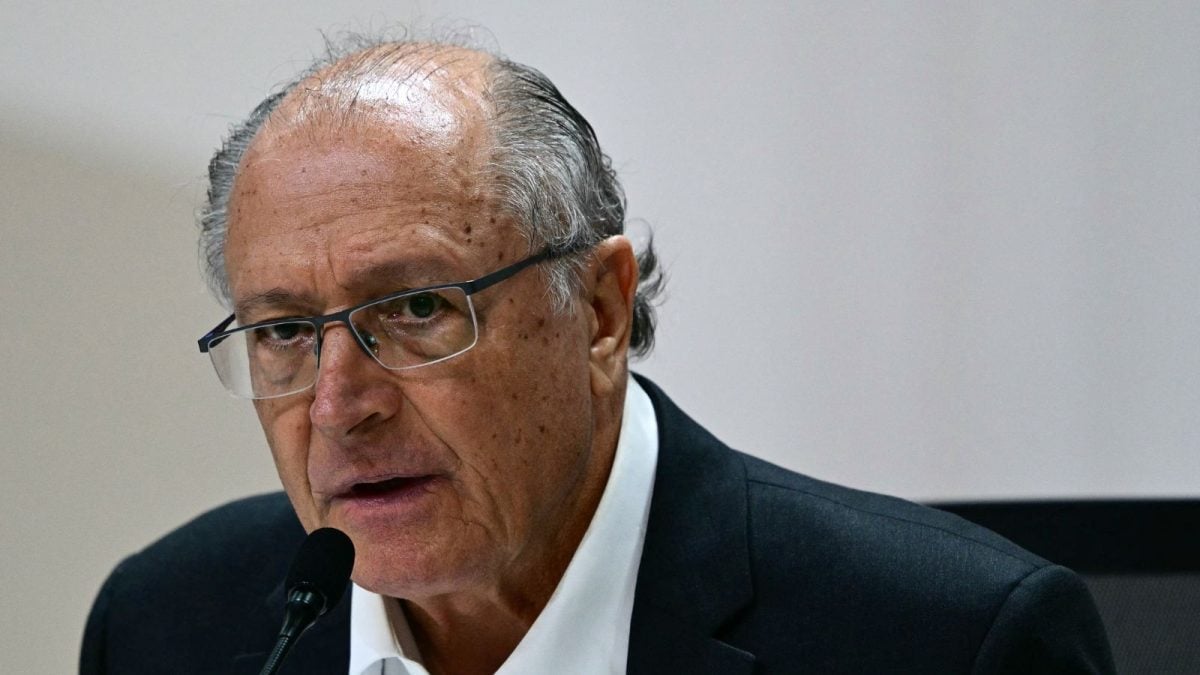
Brazilian Vice President Gerard Alcumin visited India in October 2025. (Image: AFP/File)
As Brazil hands over the BRICS baton to India as its 2026 chair, New Delhi and Rio are establishing themselves as stable partners within the increasingly important bloc. Earlier this year, Brazil hosted the BRICS summit as emerging economies seek a greater voice in a global financial system still dominated by the US dollar.
In that context, Brazil’s Vice President and Minister of Development, Industry, Trade and Services Gerard Alcumin, who visited India in October 2025, spoke at length about the future of the BRICS alliance, President Donald Trump’s repeated tariff warnings, and Brazil’s calibrated approach to great power competition in an exclusive interview with CNN-News18.
He also outlined the expanding contours of India-Brazil cooperation across trade, defense and technology, Brazil’s appreciation of India’s Akash missile system, and continued efforts to enable UPI-style digital payments in Brazil. Importantly, Alkmin also shared details about the ongoing preparations for President Lula’s visit to India in February 2026, which both sides consider to be an important milestone in bilateral relations.
Excerpt from the interview:
Brazil will host the 17th BRICS Summit in 2025, where issues such as local currency payments and AI governance were raised. Looking ahead to 2026, which two policy areas would you like India to prioritize as the new chair?
BRICS covers a wide range of cooperation areas, including trade, sustainable development, technological innovation, health, and finance. As chair, India has the privilege of shaping the agenda and focusing on the topics it deems most urgent for the bloc. Brazil is attentive to the priorities presented by India and stands ready to work constructively with the Indian leadership to advance common goals.
Both Brazil and India are major members of BRICS, but how do you assess the group’s role in a global economy still dominated by the US dollar? With President Donald Trump’s repeated warnings about tariffs, should BRICS readjust its ambitions, or is Brazil not taking these threats seriously?
BRICS does not target any country. The aim is to give emerging countries a greater voice and more effective tools in a world system still dominated by developed countries. Discussions regarding local currency payments and alternative payment arrangements are intended to reduce cost and vulnerability and are not intended to replace the US dollar. At the same time, Brazil maintains a constructive relationship with Washington while deepening South-South cooperation with partners such as India. This dual approach reflects realism rather than conflict.
With the Trump administration’s tariffs impacting Brazil, India, and several other countries, do you think the United States is unintentionally pushing emerging economies toward the BRICS?
BRICS reflects the growing importance of emerging economies. I don’t see this as an imposition, but as a movement to seek greater balance between diverse partnerships. Dialogue and cooperation, both bilateral and multilateral, remain critical to the prosperity of all countries.
Brazil recently became the second BRICS country after India to refuse to join China’s Belt and Road Initiative (BRI). What motivated that decision, and what does it imply about Brazil’s strategic autonomy, which aligns more closely with India’s own concerns about Brazil’s Belt and Road, and could it reshape Latin America’s broader attitude toward China?
Brazil maintains good relations with China, its main commercial partner, supported by strategic partnerships and high-level dialogue mechanisms. Recognizing the unique nature of our bilateral relations, we are following a tailored approach that was reaffirmed during President Xi Jinping’s visit to Brazil at the end of 2024.
Regarding your recent visit to India in October, which is said to herald a new phase in the Brazil-India strategic partnership, could you elaborate on what exactly “new phase” means, which sectors (trade, defense, technology, services) will accelerate most rapidly, and how Brazil and India will ensure follow-through beyond headline announcements?
Our strategic partnership with India dates back to 2006 and what we are seeing today is a qualitative deepening of that relationship. Bilateral trade has grown steadily, reaching $13.6 billion by November this year. President Lula and Prime Minister Narendra Modi have set an ambitious goal of increasing this to $20 billion by 2030, with a focus on diversifying beyond oil, sugar and fertilizers into value-added manufacturing, services, digital technologies and green industries.
An important step in this new phase is the expansion of the Mercosur-India Preferential Trade Agreement, which currently only covers a limited portion of our country’s trade potential. Expanding it would reduce barriers and provide a more predictable environment for both companies.
As democratic leaders of the Global South, Brazil and India are also turning their shared priorities into practical cooperation in the energy transition, health care, digital public infrastructure, and defense industry. New interagency coordination mechanisms aim to ensure progress is defined by outcomes rather than headlines. We are also encouraged by the growing engagement between businesses, particularly through the Brazil-India Business Leaders Forum, which we consider an important platform for promoting trade, investment and innovation.
President Lula is scheduled to visit India in February 2026. What important deliverables are in store for that visit? Should we expect major announcements on trade, defense and digital cooperation?
President Lula’s visit to India next year is being prepared as a major milestone, and several concrete results are expected. The visit will coincide with the AI Summit hosted by the Indian government.
On trade, we aim to significantly expand the Mercosur-India Preferential Trade Agreement to reduce barriers and facilitate bilateral commerce. On the defense front, Brazil and India are exploring industrial cooperation in areas such as aerospace, naval projects, and joint research, where their capabilities complement each other.
In the digital realm, Brazil and India are world leaders when it comes to public infrastructure. We are focused on translating this leadership into practical collaboration in payments, financial inclusion, cybersecurity, and innovation.
India has sold Akash missile system to Brazil. What is the current status of the evaluation and what is the realistic timeline for a final decision? Is Brazil considering a more ambitious model rather than simple procurement?
Brazil and India have great potential to cooperate in the aerospace and defense industry. During my recent visit to India, I opened Embraer’s new office in New Delhi, which reflects this growing involvement. We have had important discussions regarding joint production and technology transfer, and Brazil remains very open to advancing these possibilities.
Prime Minister Modi said in Brasilia that India and Brazil are “cooperating in the implementation of UPI in Brazil”. What concrete efforts are being made to bring UPI-style digital payments into Brazil’s national system?
India’s UPI and Brazil’s PIX are two of the world’s most successful digital public infrastructure systems. Current work focuses on interoperability, including standards, QR codes, messaging formats, and harmonization of payment mechanisms to enable low-cost cross-border payments.
The aim is to build a practical bridge between the two systems, benefiting remittances, tourism and commerce, and leaving room for broader financial inclusion initiatives in the future. This effort falls within a broader digital agenda, including open finance, instant payments and the potential role of central bank digital currencies.
Thirteen people were killed in the Red Fort explosion in New Delhi. What do you think about the recent terrorist attacks? Do you think BRICS should move towards a clearer joint position on counter-terrorism?
We express our condolences to the victims and reiterate that terrorism must be combated in all international fora.
Regarding connectivity and mobility, Brazil has announced a business e-visa for Indian travelers. What is the launch date? Can we expect direct flights between India and Brazil by the end of 2026?
Brazil has decided to introduce business e-visas for Indian travelers. Our authorities are finalizing the remaining regulatory and technical steps and the system is expected to be operational soon. We prioritize accuracy over haste and will announce the exact date once all testing is complete.
When it comes to direct flights, both governments see connectivity as a strategic priority. While the final decision lies with the airlines, we are actively working with aviation authorities on both sides to support commercially viable routes. Our goal is to establish direct connectivity by the end of 2026.
Beyond economics and strategy, the Brazil-India partnership also has cultural depth. Brazil’s integration of yoga and Ayurveda into its healthcare framework was highlighted during the visit. How do you plan to deepen this cultural and people-to-people exchange to build long-term affinity?
During a recent visit to India, I had the opportunity to visit an Ayurvedic hospital and learn more about traditional Indian medicine. I believe there is great scope for deeper cooperation in holistic and traditional medical approaches, especially in the Brazilian public health system.
 Click here to add News18 as your preferred news source on Google.
 brasilia, brazil
December 14, 2025, 17:16 IST
read more
