


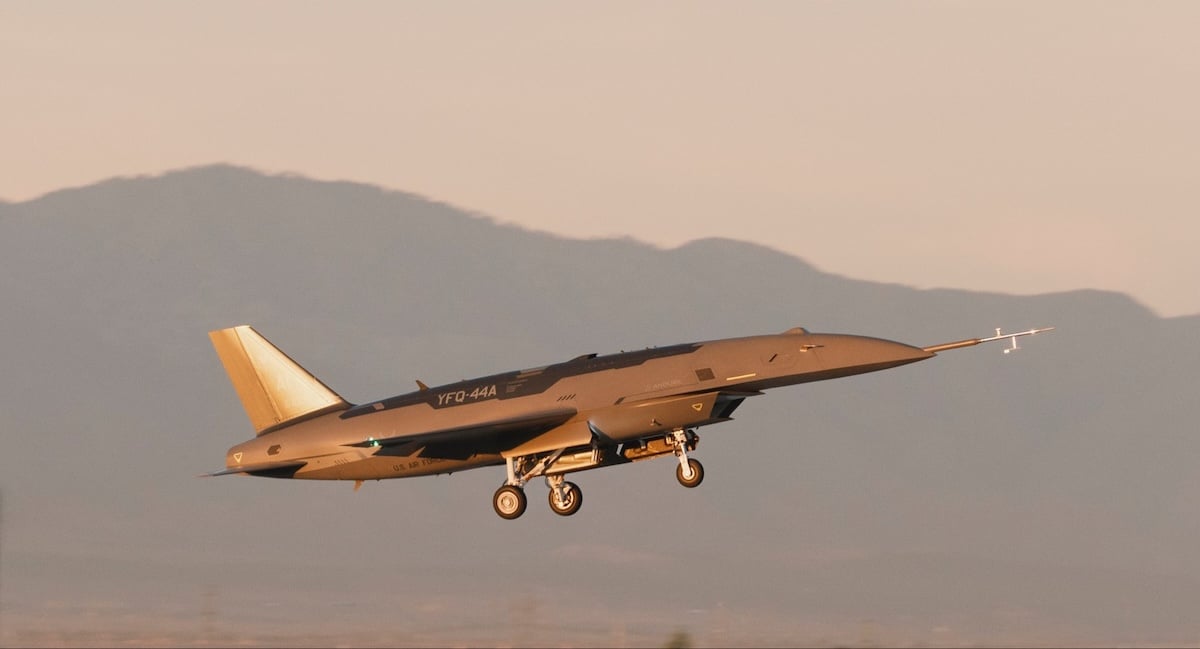
Anduril Industries is facing intense scrutiny after a series of drone crashes during tests with the US Air Force, raising questions about the company’s ability to deliver on its promise of rapid development. This month, an Altius drone suffered a dramatic failure during a test flight at Eglin Air Force Base in Florida, plummeting 8,000 feet and crashing. Just hours later, another Altius drone suffered a similar fate during another demonstration. The incidents, now publicly reported for the first time, call into question the battlefield effectiveness of Anduril, a major Silicon Valley defense company.
The company’s founder, Palmer Lackey, has made bold statements regarding the success of Altius drones in combat situations, previously claiming that these drones contributed to the destruction of “hundreds of millions of dollars” worth of Russian military assets. But insights from former Ukrainian employees, military personnel and drone operators show a gap between the company’s public claims and the actual performance of its drones in the field.
Additionally, Anduril’s Ghost reconnaissance drones have faced problems, particularly in countering Russian electronic jamming and navigating difficult terrain. The latest Ghost The company attributed the failure to rotor-related problems.
In the wake of recent crashes, Anduril insists that such incidents are part of a comprehensive testing strategy. Company spokeswoman Shannon Pryor classified these incidents as “isolated incidents” among hundreds of tests and stressed that rigorous testing under extreme conditions is fundamental to the design process.

The challenges faced by Anduril reflect broader issues within the U.S. defense sector, which is in a critical transition period toward building autonomous, AI-driven, and economically viable unmanned systems. Although this change has spurred rapid progress, it has also caused notable setbacks.
A key effort in this area is the Pentagon’s Replicator initiative, launched in 2024, which aims to field thousands of low-cost autonomous drones designed to counter China’s growing military power. Various contractors involved in this effort, particularly small and medium-sized companies focused on loitering weapons and quadcopters, have reported reliability issues during the early testing stages.
Other areas of the defense industry face similar challenges. Boeing’s Orca ultra-large unmanned underwater vehicle has undergone a major redesign due to issues with battery reliability and software integration. The U.S. Navy received its first Orca in 2023, highlighting the continued difficulty in developing effective and reliable automation systems for modern military applications.
