


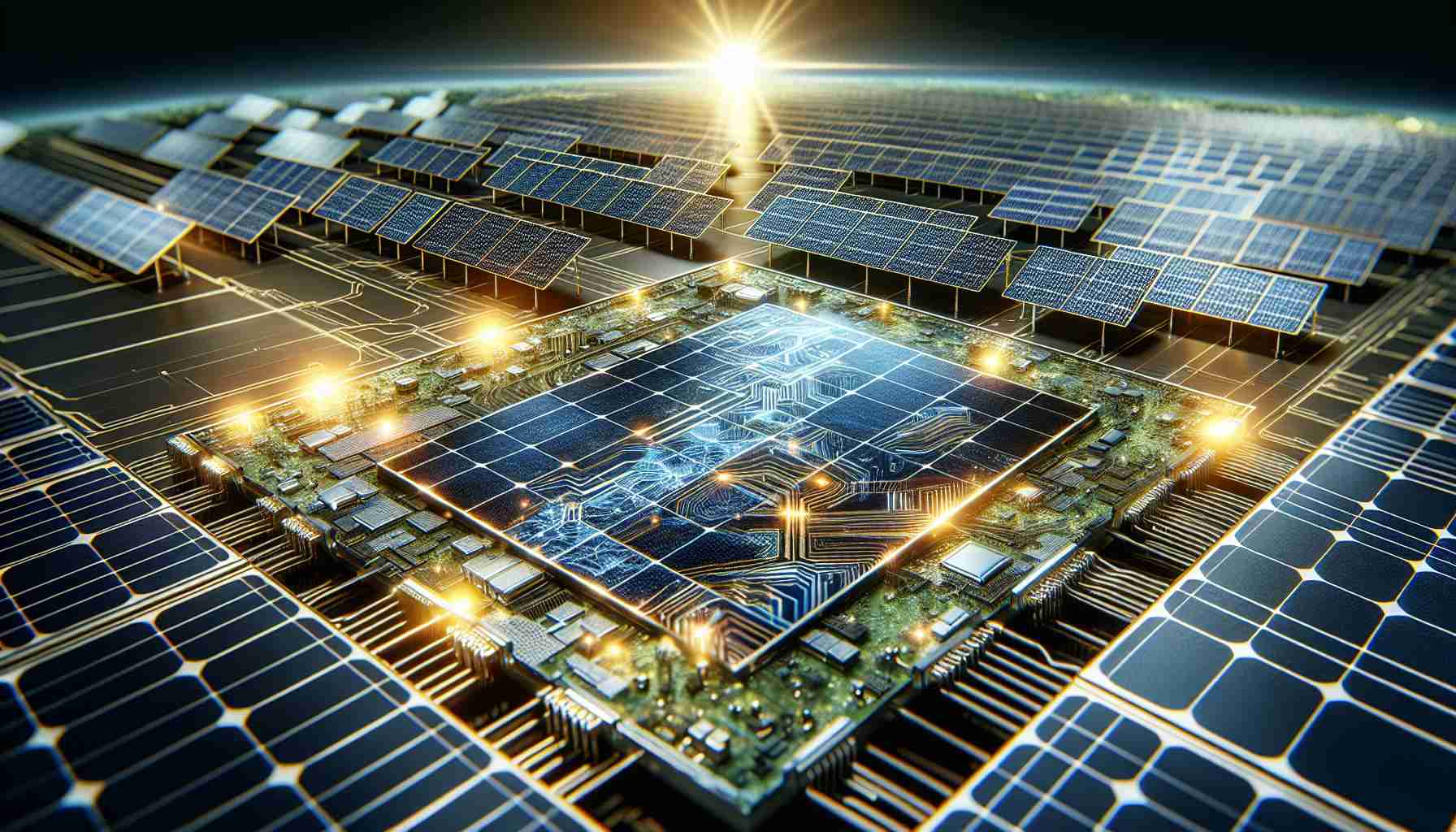
In a stunning breakthrough, scientists have unveiled a breakthrough solar technology that is poised to redefine the future of renewable energy. Recently, a research team from the renowned New Energy Research Institute announced the development of a new type of solar cell, the quantum dot solar cell (QDSC), which can significantly improve energy efficiency and reduce costs.
At the heart of this innovation are quantum dots, semiconductor particles just a few nanometers in size. These dots exhibit unique optical and electronic properties due to their quantum mechanical properties, allowing them to absorb a wider range of the solar spectrum and convert it into electricity. Unlike traditional solar cells that use silicon, QDSCs promise more versatility and higher efficiency.
This breakthrough will transform access to energy and provide a ray of hope to areas with limited access to electricity. Their production requires less energy and raw materials, positioning QDSCs as a sustainable alternative that could ease the transition to clean energy around the world.
Additionally, the technology’s adaptability for integration into wearable gadgets, building materials, and even vehicles heralds a new era in energy design and consumption. The flexibility and lightweight nature of these cells opens up pathways unimaginable with traditional photovoltaic technologies.
As we inch closer to a world less dependent on fossil fuels, this leap forward in solar power innovation highlights a promising trajectory towards a greener, more sustainable future. Take a look at QDSC, which is starting a new global energy revolution.
Quantum dot solar cells: pioneering a greener future
The revolutionary emergence of quantum dot solar cells (QDSC) will have a dramatic impact not only on the renewable energy landscape but also on the environment and the global economy. The unique properties of quantum dots, which convert a broad spectrum of sunlight into usable electricity with remarkable efficiency, are key to this transformation. Explore the impact this technology has on our world and its potential role in shaping humanity’s future.
Environmental impact
The environmental benefits of QDSC are significant. QDSC promises to reduce the carbon footprint traditionally associated with solar cell manufacturing by using fewer raw materials during manufacturing. This efficiency in energy conversion means more solar energy can be harvested with less environmental disturbance, preserving landscapes that might otherwise be devoted to vast solar power plants.
Furthermore, its high adaptability means it can be integrated onto a variety of surfaces, reducing the need for large-scale installations and allowing urban environments to make a greater contribution to renewable energy generation. Incorporating solar cells into everyday structures such as windows and walls reduces dependence on fossil fuels, reduces air pollution and helps fight climate change.
Impact on humanity
QDSCs have tremendous potential to improve the quality of life, especially in areas where access to electricity is still lacking. These solar cells have the potential to empower communities and support infrastructure development by providing a more affordable, efficient and sustainable energy source. Access to energy can foster economic growth, enhance education through improved lighting and connectivity, and greatly enhance health services by providing power to clinics and hospitals.
Such empowerment is critical as humanity moves towards the Sustainable Development Goals (SDGs), which aim to eradicate poverty and ensure energy access for all. Widespread adoption of QDSCs has the potential to close the energy gap, promote equity, and help people adapt to a rapidly changing world.
economic advantage
Economically, the reduced manufacturing cost of QDSCs compared to silicon-based solar panels represents a significant change. Lower energy costs can lead to lower production costs for industry and reduce global dependence on volatile fossil fuel markets. The cheap, efficient energy produced by QDSCs fuels innovation and fuels growth in sectors ranging from electric vehicles to sustainable architecture.
This transition will support emerging markets by promoting energy independence and economic resilience. Countries that invest in this technology can stimulate job creation in new industries, strengthen their economies, and stabilize energy prices.
future vision
As humanity stands on the brink of a new energy era, QDSC offers a vision of sustainable prosperity. The impact extends beyond immediate environmental and economic benefits and represents a paradigm shift towards more conscious energy consumption. The ability to seamlessly integrate renewable energy into everyday life will change the way humans interact with the environment and encourage a careful balance between development and sustainability.
In a world where technology continues to shape society’s trajectory, the emergence of QDSC shows how scientific advances can hold the key to solving some of humanity’s greatest challenges. This innovation not only lights the way to a greener planet, but also paves the way for a future defined by equitable energy access, economic security, and environmental harmony.
Solar revolution: How quantum dot solar cells are changing the game
In the rapidly evolving renewable energy landscape, quantum dot solar cells (QDSCs) are emerging as an innovative technology with the potential to redefine how solar power is utilized. What sets QDSC apart is the innovative use of quantum dots, tiny semiconductor particles with superior optical and electronic capabilities.
The revolutionary edge of QDSC
Energy efficiency and cost-effectiveness: Traditional solar cells are primarily made of silicon, which limits their efficiency and the spectrum of light they can utilize. In contrast, QDSCs utilize quantum dots to absorb a wide range of sunlight, significantly increasing cell efficiency while reducing production costs. This will make solar energy more accessible and economically widespread.
Versatility: One of the most attractive aspects of QDSCs is their versatility. The unique configuration allows it to be incorporated into a variety of applications beyond traditional solar panels. They can be embedded in building materials such as windows and facades to improve the energy efficiency of urban buildings. Furthermore, QDSC can be used in wearable technology and can also be integrated into vehicles, paving the way for innovative energy solutions across multiple sectors.
Sustainability and environmental impact
QDSC is celebrated not only for its technological advances but also for its sustainability. Its manufacturing process requires less energy and raw materials than traditional solar cells, reducing its environmental footprint. This makes it an attractive option for countries and regions looking to minimize their environmental impact and transition to cleaner energy.
New trends and future prospects
The advent of QDSC has generated significant interest in the renewable energy market. Analysts predict that the trend of integrating such technologies into everyday products will increase, potentially leading to smart cities powered by efficient solar energy systems. This forward-thinking approach aligns with global sustainability goals and positions QDSC at the forefront of the renewable energy revolution.
Challenges and limitations
Despite its promise, QDSCs face hurdles that must be overcome before widespread adoption. These include scaling up production, ensuring long-term durability, and improving manufacturing techniques to maximize efficiency. Addressing these challenges is critical for QDSCs to reach their full potential in the market.
In summary, quantum dot solar cells represent a breakthrough in solar cell technology and offer promising signs for an energy-abundant, affordable, and sustainable future. For more information on the latest innovations in renewable energy, visit Renewable Energy World.
Keep an eye on this space, as QDSC and the possibilities it unlocks continue to evolve and have the potential to reshape our approach to energy consumption and sustainability around the world.
