


New Delhi: Prime Minister Narendra Modi mentioned Mission Sudarshan Chakra in his last Independence Day address at the Red Fort. This reference made it clear that long-term protection of India’s airspace is now a top priority. The announcement led to intensive work across India’s defense research system, with scientists and military planners working together to address new and growing aviation threats. Those efforts are now beginning to show concrete results.
In the wake of Operation Sindoor, the urgency of air defense modernization increased. Shortly after, India formally announced Mission Sudarshan Chakra to unite the Defense Research and Development Organization (DRDO) and other defense agencies around a common objective. Modern warfare now relies heavily on stealth aircraft, unmanned aerial vehicles, and long-range precision weapons. China is flying more fifth-generation fighter jets near the Indian border, and the report also points to an increase in China’s stealth drone fleet.
Stealth platforms are designed to reduce radar visibility. The small radar cross section makes detection difficult for conventional systems and limits air defense reaction time. This reality has changed air combat around the world. Conflicts such as the Russia-Ukraine war and recent Israeli operations in West Asia highlight how decisive air and missile capabilities can be.
Add Zee News as your preferred source

As a result, demand for stealth aircraft, advanced drones, and hypersonic weapons is increasing around the world. India responded on multiple fronts. While development of advanced medium combat aircraft continues, efforts to counter stealth threats are also accelerating. One of the most important results of this effort is the creation of an anti-stealth radar grid.
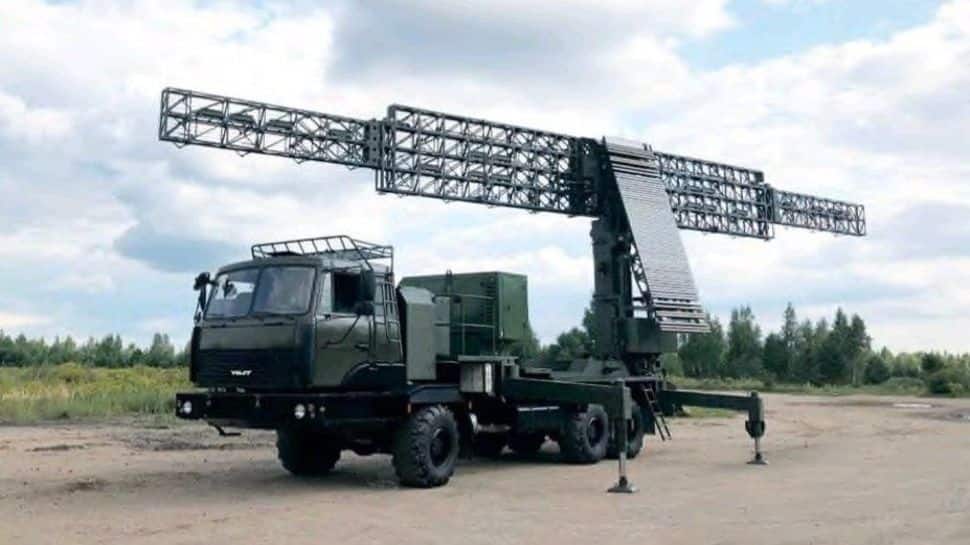
India’s air defense structure is currently moving towards a more networked model. A notable addition is the Passive Coherent Location Radar, also known as the Low Observability Detection Network, which forms the backbone of the anti-stealth radar grid. Its purpose is to provide early detection of modern stealth and low-observability aircraft, allowing for a timely response.
Grids work through multiple layers. Sensors operate in different frequency bands to fill detection gaps. Existing VHF surveillance radars provide wide area surveillance. Long-range, low-altitude radars add depth, and systems such as Vostok-D enhance coverage. PCLR is designed to address specific weaknesses exploited by stealth aircraft and provides capabilities beyond traditional radar-centric air defense models.
Unlike traditional radar, it does not emit a signal. Instead, it relies on signals already present in the environment, such as commercial FM radio broadcasts. When an aircraft passes through this signal field, it creates measurable interference. The system analyzes these changes to determine movement and location. Because PCLR does not transmit, it is difficult to detect and track, allowing continuous silent surveillance.
Effective air defense systems rely on multiple interconnected layers. Sensors and radar detect incoming threats. A command and control center evaluates the data. Interceptors and air defense weapons will carry out the engagement if necessary. This structure protects military bases, population centers, and critical infrastructure.
India’s need for a robust air defense is determined by its geography and security environment. Long borders, continued regional tensions, and the rapid proliferation of missile and drone technology make early detection essential. A strong air defense network protects sovereignty and reduces the risk of surprise attacks.
India already operates a multi-layered combination of air defense systems. Akash missile system covers indigenous people. The S-400 adds long-range capabilities. The Barak-8 strengthens medium-range defense, and the SPYDER system deals with quick-reaction threats. Together they form a comprehensive shield.
The anti-stealth radar grid adds a new dimension to this structure. Advanced fighter aircraft such as the American F-35, Russian Su-57, and Chinese J-35 are designed to minimize detection, but low frequency and passive systems reduce that advantage. The PCLR’s multistatic design uses multiple receivers to track targets from different angles, making it difficult to suppress. Reliance on low-frequency signals further improves the chances of detecting stealth platforms.
PCLR does not emit radiation and is therefore resistant to anti-radiation missiles and electronic detection systems. Due to the technical and political complexities of jamming commercial broadcast bands, traditional jamming methods are also not very effective.
The system is designed to complement, rather than replace, existing radars. VHF radar provides early warning, high frequency radar provides accurate tracking, and PCLR confirms and adjusts detections. Data fusion between sensors increases accuracy and reduces false alarms.
Integration trials are currently underway. Sensor coordination, command linking, and real-time tracking have been tested. Once fully operational, the anti-stealth radar grid will be a major step in India’s move towards a fully networked and layered air surveillance system, improving its ability to monitor and protect India’s airspace in an era of advanced air threats.
