
Close Menu
Karachi Chronicle
  • Home
  • AI
  • Business
  • Entertainment
  • Fashion
  • Politics
  • Sports
  • Tech
  • World

Subscribe to Updates

Subscribe to our newsletter and never miss our latest news

Subscribe my Newsletter for New Posts & tips Let's stay updated!

What's Hot

Surprisingly Tough Competition for Meta’s Ray-Ban

How AI assistance impacts the formation of coding skills \ Anthropic

Chip stocks rise after earnings, Nvidia H200 approved in China

Facebook X (Twitter) Instagram
  • Home
  • About us
  • Advertise
  • Contact us
  • DMCA
  • Privacy Policy
  • Terms & Conditions
Facebook X (Twitter) Instagram Pinterest Vimeo
Karachi Chronicle
  • Home
  • AI
  • Business
  • Entertainment
  • Fashion
  • Politics
  • Sports
  • Tech
  • World
Karachi Chronicle
You are at:Home » Russian scientists will develop a plasma engine that can reach Mars in 30 days. Spaceships can become obsolete
Tech

Russian scientists will develop a plasma engine that can reach Mars in 30 days. Spaceships can become obsolete

Adnan MaharBy Adnan MaharFebruary 11, 2025No Comments4 Mins Read2 Views
Facebook Twitter Pinterest Telegram LinkedIn Tumblr Email Reddit
Share
Facebook Twitter LinkedIn Pinterest WhatsApp Email


Russian scientists have unveiled an ambitious new plasma engine that can dramatically reduce travel time to Mars, reducing travel from months to just one or two. If successful, this breakthrough will redefine interplanetary exploration and bring humanity closer to deep-sea travel. But is this cutting-edge technology ready for a real-world mission, or is it just another sci-fi dream?

The science behind the plasma engine

Developed by Rosatom’s Troitsk Institute, this innovative magneto plasma propulsion system functions differently than traditional chemical rockets. Instead of burning fuel to generate thrust, electromagnetic fields are used to accelerate charged particles (mainly hydrogen ions) to extreme speeds of 100 km/s (360,000 km/h). By comparison, traditional rockets can only achieve 4.5 km/s due to combustion limitations.

Unlike shore chemical propulsion, which provides an initial burst of speed, the plasma engine provides continuous thrust, allowing the spacecraft to steadily accelerate over time. This sustained acceleration will allow the spacecraft to reach Mars in 30-60 days, significantly reducing the exposure and psychological tension of astronauts on the voyage.

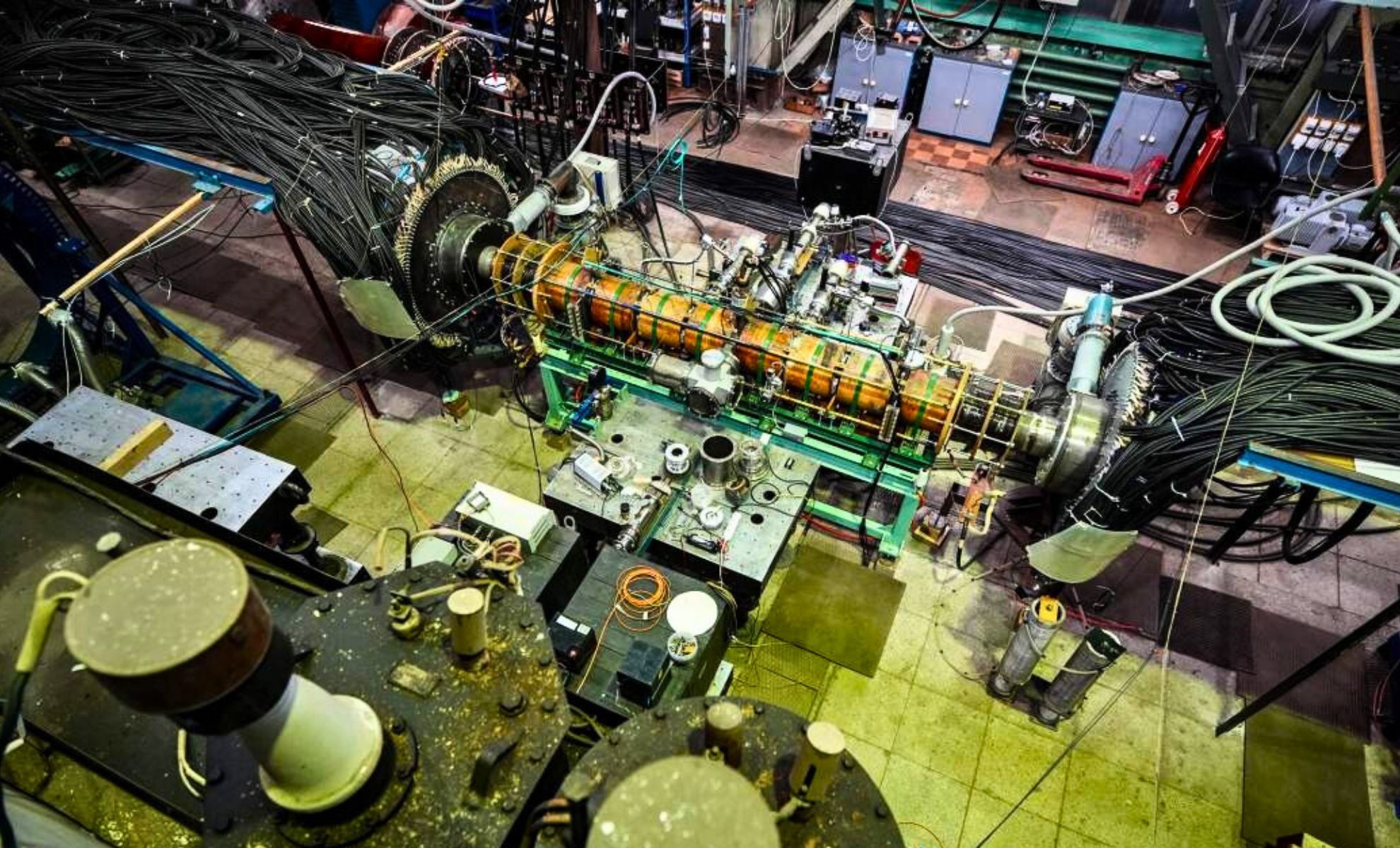
Magneto Plasma Propulsion SystemMagneto Plasma Propulsion System
Photo: Izvestia/Sergey Lantyukhov

Prototypes already under test

This is not just a theoretical concept. Rosatom scientists have already built a working prototype for the plasma engine, which is currently undergoing ground testing. The experimental setup includes a 4-meter wide and 14-meter long vacuum chamber designed to replicate spatial conditions. The engine operates in pulse-period mode at an output of 300 kW, demonstrating a lifespan of 2,400 hours long enough for a Mars-bound journey.

When operated, the plasma engine will not replace traditional chemical rockets, but will take over as the spacecraft reaches orbit. The system can also be used as a space pull, and can transport cargo between planetary orbits much faster than current technology allows.

Magneto Plasma Propulsion SystemMagneto Plasma Propulsion System
Photo: Izvestia/Sergey Lantyukhov

Why hydrogen? The ultimate space fuel

One of the key innovations behind this engine is the use of hydrogen as the main propellant. The advantages of hydrogen are:

Lightweight and abundant: It is the most common element in the universe and can potentially be harvested in space. Efficient Acceleration: Lighter atoms accelerate faster ions and maximize propulsion efficiency. Low Temperature Generation: Unlike other plasma propulsion methods, this system does not require extreme temperatures and reduces wear and tear of engine components.

How does it compare to existing technology?

Plasma propulsion is not a new concept, but the speed claimed by Rosatom (100 km/s) is far beyond the capabilities of existing ion thrusters, which usually maximize at 30-50 km/s. If these claims endure, Russia could be decades away from its competitors in advanced propulsion systems.

Currently, NASA’s mental mission and some One-Web satellites already use Russian-made plasma rasters, demonstrating the country’s expertise in this field. However, the new system aims to take plasma propulsion to an entirely new level.

When can this engine accommodate space?

This technology roadmap is ambitious. The flight-enabled model of the engine is expected to be completed by 2030, according to the project’s science advisor. While this timeline may seem optimistic, Russia’s track record in space propulsion gives the project credibility.

If successful, this innovation could open up faster missions to Mars, deep space exploration, and even the possibility of reaching the outer solar system within human life span.

Is it a game changer or a hype?

The idea of ​​reaching Mars in a month or two sounds incredible, but some challenges remain.

Independent validation: Peer-reviewed studies have not yet confirmed engine performance. Integration with spacecraft: How will it be incorporated into future Mars missions? Energy Source: A nuclear supply is likely to be required, adding complexity to the design.

Despite these uncertainties, if this technology offers its promise, it could mark a new era of space exploration. Whether it becomes a reality or a futuristic concept, the idea of ​​a 30-day journey to Mars is closer than ever.

This article was originally published on en.iz.ru.

Is there a response? Share your thoughts in the comments

Did you enjoy this article? Subscribe to our free newsletter that captivates stories, exclusive content and the latest news.


Source link

Share. Facebook Twitter Pinterest LinkedIn Reddit WhatsApp Telegram Email
Previous ArticleItalian police arrest 181 people to stop reconstructing mafia in Sicily
Next Article Alibaba’s Qwen Powers Top 10 open source models exceed Deepseek with the know-how of China AI
Adnan Mahar
  • Website

Adnan is a passionate doctor from Pakistan with a keen interest in exploring the world of politics, sports, and international affairs. As an avid reader and lifelong learner, he is deeply committed to sharing insights, perspectives, and thought-provoking ideas. His journey combines a love for knowledge with an analytical approach to current events, aiming to inspire meaningful conversations and broaden understanding across a wide range of topics.

Related Posts

Chip stocks rise after earnings, Nvidia H200 approved in China

January 28, 2026

India is betting big on homegrown AI as Dell and NVIDIA ramp up NxtGen’s giant AI factory

January 28, 2026

Meta is blocking links to ICE listings on Facebook, Instagram, and threads

January 27, 2026
Leave A Reply Cancel Reply

Top Posts

20 Most Anticipated Sex Movies of 2025

January 22, 2025869 Views

President Trump’s SEC nominee Paul Atkins marries multi-billion dollar roof fortune

December 14, 2024134 Views

How to tell the difference between fake and genuine Adidas Sambas

December 26, 2024133 Views

Alice Munro’s Passive Voice | New Yorker

December 23, 202490 Views
Don't Miss
AI January 31, 2026

Surprisingly Tough Competition for Meta’s Ray-Ban

Thanks to Meta, everyone wants a piece of the AI glasses pie. While Ray-Ban Meta…

How AI assistance impacts the formation of coding skills \ Anthropic

Visual reasoning added to Gemini Flash models

Mozilla, OpenAI builds an AI “rebel alliance” against Anthropic

Subscribe to Updates

Subscribe to our newsletter and never miss our latest news

Subscribe my Newsletter for New Posts & tips Let's stay updated!

About Us
About Us

Welcome to Karachi Chronicle, your go-to source for the latest and most insightful updates across a range of topics that matter most in today’s fast-paced world. We are dedicated to delivering timely, accurate, and engaging content that covers a variety of subjects including Sports, Politics, World Affairs, Entertainment, and the ever-evolving field of Artificial Intelligence.

Facebook X (Twitter) Pinterest YouTube WhatsApp
Our Picks

Surprisingly Tough Competition for Meta’s Ray-Ban

How AI assistance impacts the formation of coding skills \ Anthropic

Chip stocks rise after earnings, Nvidia H200 approved in China

Most Popular

Anthropic agrees to work with music publishers to prevent copyright infringement

December 16, 20070 Views

Elon Musk launches new UK AI technology company amid speculation he is planning to donate millions to Nigel Farage’s Reform Party

July 14, 20170 Views

chatgpt makers claim data breach claims “seriously”

July 14, 20170 Views
© 2026 karachichronicle. Designed by karachichronicle.
  • Home
  • About us
  • Advertise
  • Contact us
  • DMCA
  • Privacy Policy
  • Terms & Conditions

Type above and press Enter to search. Press Esc to cancel.