


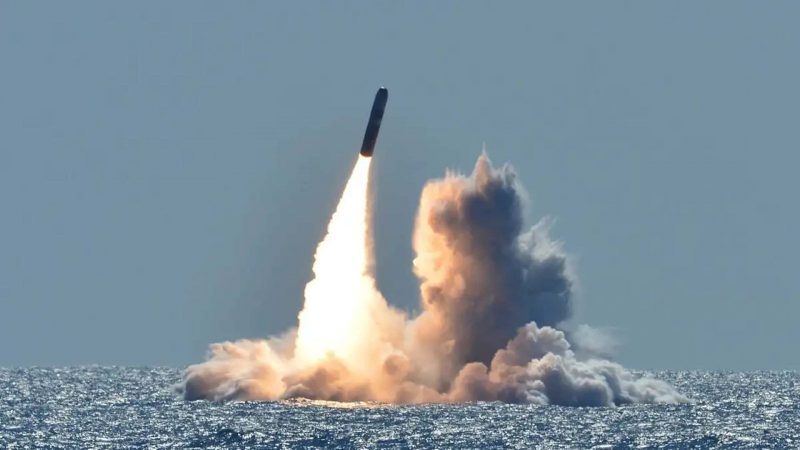
Fugan decades after the Cuba’s missile crisis, the world came on a brink of another nuclear -confrontation between Russia and the United States on January 25, 1995.
Interestingly, the anniversary of the incident matches the recent comments of Donald Trump on nuclear weapons management talks between Russia and China. Speaking at the Davos Summit, the newly selected US President Donald Trump states: To hear it. “We want to see if we can denuclearize. I think it’s very possible,” he added.
Russia wants to start negotiations as soon as possible, in response to the comments of President Trump, Dmitry Peskov, Kremlin’s spokesman.
Russia and the United States -led NATOs have been nervous as a result of the Ukrainian War, and the nuclear threats are still close to Europe. For example, in September 2024, Russia’s President Vladimir Putin warned that Moscow would consider nuclear retaliation if the nuclear nuclear nation started attacking Russia.
We remember the “fear of Black Blant” in this increase in this increase from Russia. This is the day when Russia and the United States come 30 years ago on the back of nuclear vibrations.
Black brunt is scary
The incident occurred several decades after the 1962 Cuban missile crisis. This is the era when the power of the two worlds approached the nuclear conflict in the heat of the Cold War. The incident on January 25, 1995 was not as important as the Cuban missile crisis, but it was still a dangerous crisis.
The Cold War officially ended in 1991 with the collapse of the Soviet Union. This has relieved the dangers of nuclear war approaching. However, when a Russian officer thought that the Norwegian rocket was launched after observing the Aurorabolaris, the fear was reigned.
Earlier on January 25, 1995, a team of Norwegian and American scientists launched a black blunt XII 4 -stage rocket from the Norwegian Voluyaloquare, a launch location off the northwest coast of the Northern Europe. Ta. The purpose of the launch was to study Aurora via Norway, the Arctic Sea.

Scientists have notified Russia and about 30 states about high -altitude scientific experiments, but Russian radar engineers received some information for bureaucratic mistakes by the Russian Ministry of Foreign Affairs. There was no.
Russian missile attack warning systems (MAWS), stationed at Orenegor Scrader Station in the northwestern Russia (north coast of Norwegian), are “launched” of four missiles because they are not aware of the scientific mission. I detected what I thought. The executives could not immediately identify the missile, but the traveling distance and altitude seemed to be completely consistent with the Trident II launched from a US submarine.
The missile seemed to be heading to Moscow. Russia’s MAWS had no choice but to consider it a potential attack and warn Moscow officials.

A signal was sent to the nuclear briefcase in a nuclear briefcase, which was carried by Russia’s President Bolis Elyzin and other senior officials at the time. Nuclear briefcase holds a launch code for missile weapons in a country that can be used for nuclear power.
Typical tricks, Russian officials had a deadline. They had to detect the attack, evaluate them, and decide whether to retaliate within 10 minutes. Russia acted only for 5 minutes because it was spending 5 minutes to track the “missile” trajectory.
Russian strategic units were quickly wary. Since the procedure of the Cold War era known as the “release of warning” was still in place, mutual destruction is guaranteed in the event of a nuclear attack.
“Despite the only legal authority of” pressing the button “, each man had technical abilities,” he reads an excerpt from the article in the Weapon Management Center. Russian submarine commander was immediately contacted via the radio. The strategic unit was instructed to prepare the following instructions: This was a launch order.
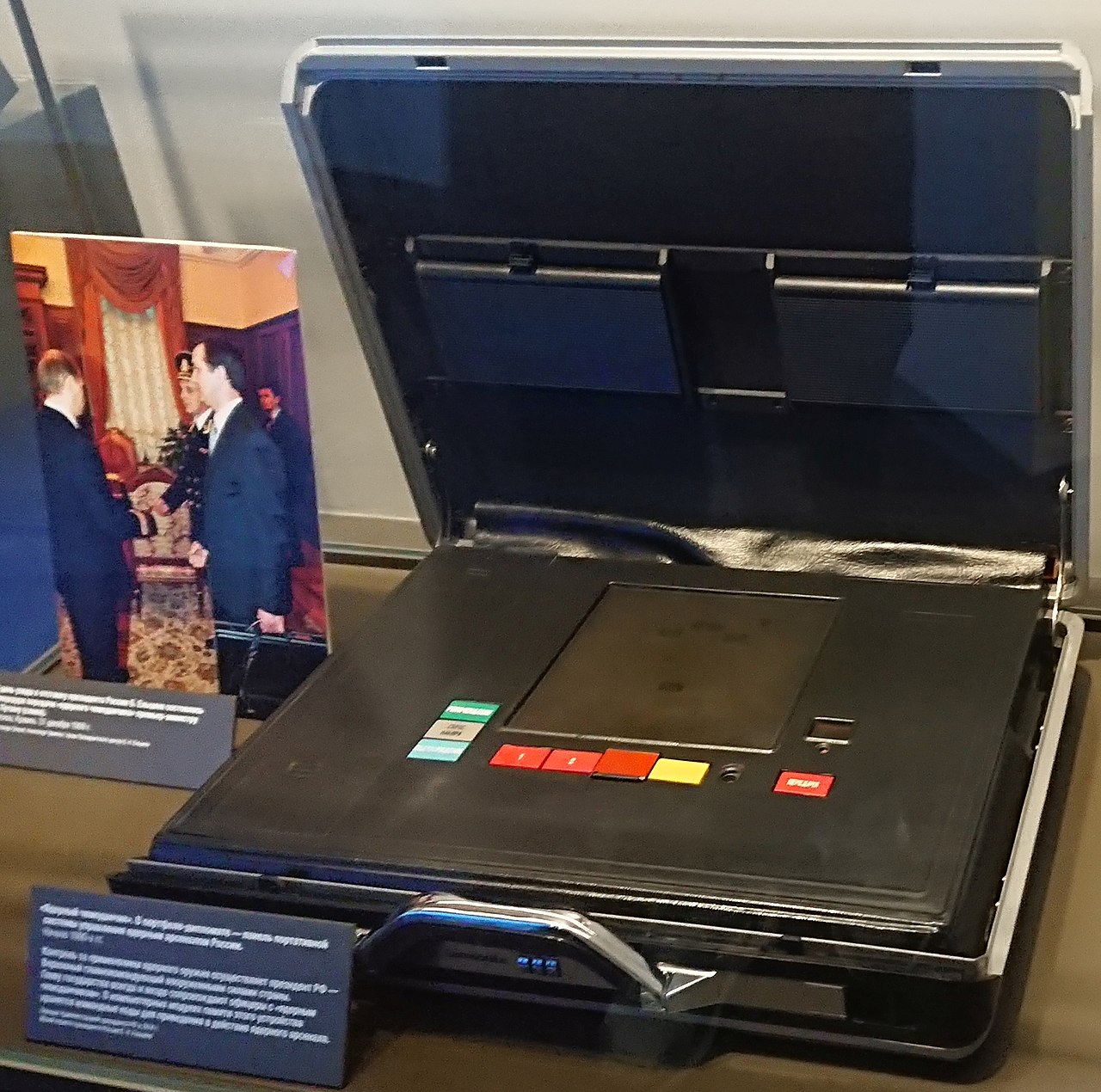
Russian commander was waiting for an order. Russian strategic protocols at the time said they could launch Russian missiles before enemy missiles reach Russian territory.
When the rockets were separated, the radar began to follow each stage. According to the report, one of the Commander of Yeltsin believed that these fallen parts were more warheads or multiple independent targets. However, Yeltsin did not issue a launch order.
A few minutes later, the rocket plunged into the sea near Spitzbergen, a population island of the Svarbad Islands.
It was just as fast as the whole began. Russia’s launch was avoided, and the high alert unit was told to stop.
Yeltsin said the next day he had turned the shet on the media. Yeltsin said, “Yesterday, I used a” small black case “with a button that I was always together. “I immediately contacted the Ministry of Defense and all military commanders. We tracked this missile trajectory from the beginning to the end.”
Russians later learned that an unidentified object was a scientific rocket launched by Norway.
It was a false alarm and was found to be a danger of nuclear war between the two largest military power in the world.
“A police officer has reported that it has detected ballistic missiles that began in the Norwegian territory,” recalls MAWS General Anatley Sokolov.
“If it was released on the optimal orbital, its range was expanded to 3,500 kilometers. This is the distance to Moscow. Especially in the early stages of flight tracks, the beginning of private missiles and nuclear missiles. It looks like the same. “
The incident is not remembered as other nuclear crisis, but has led to some positive reforms aimed at avoiding similar crisis. In the aftermath of the incident, both sides have decided to redesign and re -evaluate the disclosure of missiles.
